A Walk, a Stretch Break, or a Dance at Home?
Compare a walk, stretch break, or dance at home by time, space, and preference, then choose a flexible weekly movement plan that fits your day.
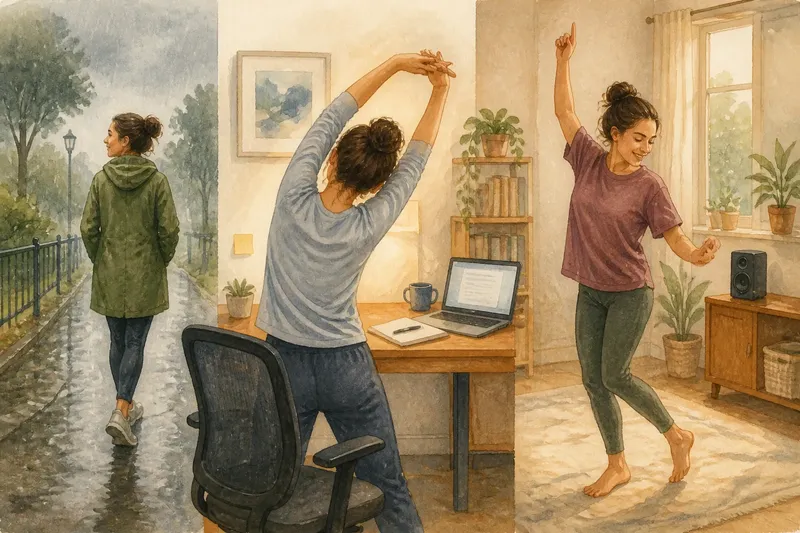
Should you take a walk, do a stretch break, or dance at home? For everyday movement, the best fit is the one your day can accommodate without turning a small decision into a production. A walk needs a route and a door; a stretch break needs a patch of floor; dancing needs a little room and a willingness to look unobserved, even if the house is empty.
These options can all interrupt a sedentary stretch and add a change of pace. They differ in how much space they ask for, how easily they fit between obligations, and what kind of movement feels agreeable. Treat them as choices, not a ranking.
How do you choose among a walk, stretch break, or dance at home?
Start with the constraint that is actually shaping your day. If you have a usable route and enough time to leave and return, walking offers a change of scenery. If you are working at a desk or waiting for something to finish, a brief stretch break can happen without a change of clothes or location. If outside access is awkward and you want movement with music, dancing can make an indoor room feel less like a waiting area.
- Time: Walking usually includes the transition outdoors; a stretch break can fit into a short pause. Dancing can be brief or continue for as long as it remains comfortable.
- Space: Walking uses a route. Stretching needs enough clear floor to move without bumping into furniture. Dancing calls for a little more room to step and turn safely.
- Preference: Choose the option that sounds tolerable today, not the one you think ought to impress someone.
- Energy: A slow walk or gentle range-of-motion stretches may suit a low-energy moment. Music and larger movements may appeal when you feel restless.
Say you have a desk-based afternoon, rain outside, and a meeting beginning soon. You might clear a small space beside your chair, stand, and do a gentle stretch break; the expected observable result is a change in posture and a pause from sitting, without needing to go anywhere. On another day, with more time and clear weather, a nearby walk may be the simpler choice. The point is to match the option to the conditions, not to defend yesterday’s choice.
What might a realistic week look like?
A useful plan gives each option a place while leaving room for ordinary disruption. Here is one flexible pattern, not a prescription or a streak to protect:
- Monday: Take a walk if you have a convenient route. If leaving is impractical, use a stretch break during a natural pause.
- Tuesday: Try a stretch break between tasks. Keep the movements comfortable and use a stable surface for balance if you need one.
- Wednesday: Put on a familiar song and dance at home if you have clear floor space. Smaller steps count as a way to move; acrobatics are not required.
- Thursday: Choose whichever option suits your schedule and mood. If the day is crowded, a short pause for gentle movement is a reasonable substitute for a longer outing.
- Friday: Take a walk or dance indoors, depending on the weather, access, and what sounds appealing.
- Weekend: Leave the plan open. A walk with someone, a few stretches after sitting, or no planned session at all may fit better.
When a planned walk is blocked by weather, access, or a packed schedule, substitute an indoor option rather than treating the plan as failed. If you miss a stretch break, take the next natural pause; there is no need to repay the missed one. If dancing feels uncomfortable, switch to a walk or gentle stretches. The plan works best as a menu that can be rearranged.
How can each option fit into a busy day?
Can a walk count if it is not brisk?
A comfortable walk can still provide a reason to stand, move, and get outside. Choose a route that feels manageable for the time and conditions available, and turn back or shorten it if the day changes.
What should you do during a stretch break?
Try comfortable movements such as shoulder rolls, reaching gently overhead, or standing and shifting your weight. Avoid forcing a stretch or holding a position that causes pain; the aim is a change of posture, not a contest in flexibility.
How much room does dancing at home need?
Clear nearby clutter and leave enough space to step without striking furniture or slipping. A small, controlled sway can suit a tight room; choose a less mobile option if the floor or surroundings are unsafe.
What if none of the options feels appealing?
Make the choice smaller: stand up, walk around the room, or change position for a moment. If movement is painful or you have a health concern that affects what is appropriate, ask a qualified health professional for guidance.
What is not worth the effort?
It is not necessary to buy special clothes, equipment, or a subscription before choosing among these options. Nor does every pause need a timer, a playlist, or a formal record. Those additions can help if you enjoy them, but they can also turn a plain, useful choice into another task to manage.
For movement that fits your day, keep the decision local: look at the time you have, the space available, and the option you are most willing to do. A walk, stretch break, or dance at home can each be a sensible answer under different conditions. If the week changes, change the choice with it.